
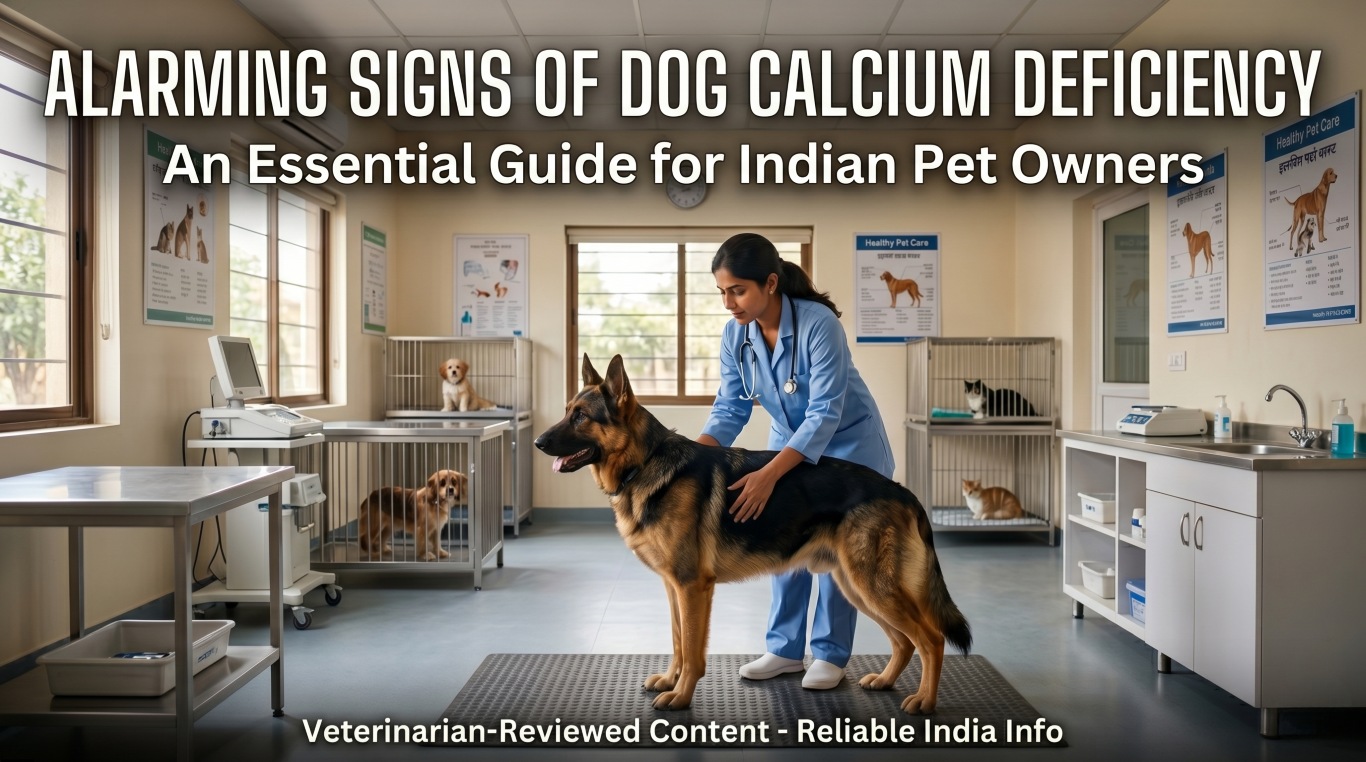
Signs of Dog Calcium Deficiency in india, Every Indian Dog Owner Must Know
Table of Contents
- Why Calcium Deficiency Is So Common in Indian Dogs
- How Calcium Works in Your Dog’s Body
- The 8 Warning Signs of Calcium Deficiency
- Main Causes in Indian Conditions
- How to Diagnose and Treat Calcium Deficiency
- Best Calcium Supplements for Dogs in India
- Prevention: The Smartest Strategy
- FAQs
Here’s a fact that surprises most Indian dog owners: dog calcium deficiency signs in India is one of the most common nutritional problems in India – and most people dealing with it don’t even know it’s happening. By the time the signs become obvious enough to raise alarm, the problem has often been quietly building for months.
Knowing the dog calcium deficiency signs in India could save your dog from unnecessary pain, permanent skeletal damage, or in acute cases – a life-threatening emergency. This guide walks you through exactly what to look for, what causes it in Indian conditions, and how to fix it.
Let’s start with the basics – because understanding why calcium matters helps everything else make sense
Why Dog Calcium Deficiency Signs in India Is So Common
India has one of the fastest-growing pet populations in the world – but pet nutrition knowledge hasn’t always kept pace. The two most common feeding scenarios in Indian homes are:
- Home-cooked diets (rice + chicken, or dal + rice + meat scraps) – these are almost universally low in calcium and have an inverted calcium-to-phosphorus ratio
- Generic commercial foods without supplementation – often calorie-adequate but micronutrient-deficient
On top of that, Indian dog owners are frequently given advice to add “extra calcium” to their dogs’ diets – and then do it incorrectly, causing imbalance rather than correction. It’s a perfect storm for calcium-related problems.
How Calcium Works in Your Dog’s Body
Calcium isn’t just a bone mineral – it’s involved in virtually every physiological process:
- Structural – 99% of the body’s calcium is stored in bones and teeth
- Muscular – every muscle contraction, including the heart, requires calcium
- Neurological – nerve signal transmission depends on calcium ion movement
- Immune – calcium plays a role in immune cell activation
The body maintains blood calcium within a very narrow range (2.2–2.7 mmol/L). When dietary calcium is inadequate, the parathyroid glands release PTH (parathyroid hormone), which pulls calcium out of bone to maintain blood levels. This is why long-term calcium deficiency causes skeletal weakening even when blood calcium appears normal — the bones are being quietly depleted to keep the blood level up.
The 8 Warning Signs of Calcium Deficiency
Early / Chronic Signs
These develop slowly and are easy to miss:
1. Bowed or Deformed Legs in Puppies
This is one of the most visible signs of calcium deficiency in growing dogs. The leg bones literally bend under body weight because they lack the mineral density to bear the load. It’s often mistaken for a genetic problem – but in many cases it’s purely nutritional.
2. Enlarged, Swollen-Looking Joints
Particularly at the knees and ankles in puppies. The joints appear disproportionately large relative to the limbs – a classic sign of nutritional bone disease.
3. Unexplained Fractures
Bones that break from minor trauma – a small fall, a jump from a low surface – are a red flag. Normal activity shouldn’t fracture normal bones.
4. Dull, Weak Coat and Brittle Nails
Calcium is involved in keratin formation. Chronic deficiency manifests in coat and nail quality before skeletal symptoms become obvious.
5. Subtle Behavioural Changes
Mild anxiety, restlessness, or unusual timidity can be early neurological signs of low-grade calcium deficiency affecting nerve function.
Moderate Signs
6. Muscle Weakness and Stiff Gait
Difficulty rising, reluctance to climb stairs or jump, an unusual waddling or stiff gait. Impaired muscle contraction from calcium deficiency produces weakness and cramping.
7. Facial Muscle Twitching
Particularly around the muzzle and face. A subtle but significant sign of early neuromuscular calcium deficiency.
8. Pica – Eating Soil, Stones, or Non-Food Items
This is the body’s instinctive attempt to correct a mineral deficiency. If your dog is regularly eating soil, plaster from walls, or small stones, mineral deficiency – particularly calcium – is the most likely cause.
Severe / Acute Signs (Veterinary Emergency)
These require immediate professional treatment — do not attempt home management:
- Generalised muscle tremors – uncontrolled trembling across the body
- Tetany – sustained rigid muscle contraction; the dog cannot relax
- Seizures – severe hypocalcaemia triggers seizure activity
- Cardiac arrhythmia – the heart muscle requires calcium for normal rhythm
- Collapse – complete loss of muscle function
Eclampsia in lactating females – a specific form of acute calcium deficiency occurring 2–4 weeks post-whelping – is the most dangerous acute presentation. Signs include sudden tremors, inability to stand, extreme agitation, and high temperature. This is a veterinary emergency that requires intravenous calcium administration immediately.
Main Causes in Indian Conditions
Home-Prepared Diets Without Calcium Supplementation
This is the leading cause. Rice and chicken provides phosphorus but very little calcium. The resulting calcium-to-phosphorus ratio can be as inverted as 1:5 – when the body needs 1.2:1 to 2:1. The phosphorus excess actively accelerates calcium loss from bone.
Vitamin D Deficiency
Vitamin D is required for calcium absorption in the intestine. Dogs cannot synthesise adequate Vitamin D from sunlight (unlike humans) – it must come from diet. Vitamin D-deficient dogs absorb calcium poorly even when dietary intake is adequate.
Incorrect Supplementation
Adding excessive calcium – particularly in puppies – can paradoxically create functional deficiency by suppressing PTH and downregulating intestinal calcium transport. Balance matters more than quantity.
Lactation
The calcium demand of milk production can outstrip a female’s reserves rapidly. Lactating females need significantly increased calcium from the start of pregnancy — not just after birth.
How to Diagnose and Treat Dog Calcium Deficiency signs in India
Diagnosis
A blood test (serum biochemistry panel) is the definitive diagnostic tool. Ask your vet to check:
– Ionised calcium – the biologically active form; more accurate than total calcium
– Phosphorus – to assess Ca:P ratio
– Vitamin D (25-OH) – if Vitamin D deficiency is suspected
– PTH – if parathyroid function is in question
X-rays can reveal reduced bone density and cortical thinning in chronic cases.
Treatment
Acute/severe cases: Intravenous calcium gluconate under veterinary monitoring. Not a home treatment under any circumstances.
Chronic dietary deficiency: Identify and fix the root cause – almost always diet. Introduce a correctly balanced calcium supplement immediately and transition to a nutritionally complete feeding plan.
Best Calcium Supplements for Dogs in India
Canina PUPPY CALCIUM Tablet
Specifically formulated for growing large-breed puppies – provides calcium and phosphorus in the correct ratio for controlled bone development. This is not a generic calcium supplement -it is calibrated to support, not accelerate, bone growth. The most important calcium product for puppies in India.
UPCO Bone Meal Powder
A natural whole-food calcium source derived from bovine bone – providing calcium, phosphorus, magnesium, and trace minerals in the ratios naturally found in bone. The ideal supplement for dogs on home-cooked diets. Add to every meal when feeding homemade food.
Canina CANHYDROX GAG Tablets
For dogs with established joint issues secondary to calcium deficiency or dysplasia, CANHYDROX provides glucosamine, chondroitin, and hyaluronic acid to support the cartilage and joint fluid that calcium deficiency has compromised.
For scientific reference on calcium requirements in dogs, the Nutrient Requirements of Dogs and Cats is the authoritative source.
Prevention: The Smartest Strategy
As with almost all nutritional problems, prevention is far simpler and cheaper than treatment.
If feeding commercial food:
Choose a “complete and balanced” food appropriate for your dog’s life stage. No additional calcium supplementation is needed – the food already contains the correct amount.
If feeding home-cooked food:
Add UPCO Bone Meal with every meal without exception. A practical guide: for every 450g of meat, add approximately 1 teaspoon of bone meal to restore a reasonable Ca:P ratio.
For pregnant and lactating females:
Increase dietary calcium throughout pregnancy and lactation. Do not wait for symptoms – eclampsia develops acutely and can be fatal within hours of onset.
For all dogs:
Annual veterinary blood panels identify subclinical calcium imbalances before they become clinical problems. Make it a routine.
FAQs {#faqs}
Q1: What are the first signs of Dog calcium deficiency signs in India?
The earliest signs are often subtle — bowed legs in puppies, mild restlessness or anxiety, dull coat, and pica (eating soil or stones). In lactating females, sudden muscle tremors and inability to stand are the acute warning signs requiring immediate veterinary attention.
Q2: Can I give my dog human calcium tablets?
Not recommended. Human calcium supplements often contain Vitamin D3 at doses calibrated for humans, additional minerals, and formulations not tested for dogs. Use supplements specifically designed for dogs – Canina PUPPY CALCIUM for puppies, UPCO Bone Meal for adults.
Q3: My puppy has bowed legs — is it calcium deficiency?
Bowed legs in puppies can be nutritional (calcium deficiency) or developmental (growth plate abnormality). A vet examination including X-rays and a blood calcium panel will differentiate. If the diet has been home-cooked without supplementation, dog calcium deficiency signs in India is the most likely cause and should be addressed immediately.
Q4: How long does it take to correct calcium deficiency?
Blood calcium normalises within days to weeks of proper supplementation. Skeletal changes take longer — weeks to months of consistent supplementation combined with weight-bearing exercise. In puppies, early correction allows meaningful catch-up development.
Q5: How much bone meal should I add to my dog’s home-cooked food?
A general guide: 1 teaspoon of UPCO Bone Meal per 450g of meat fed. Always follow product label dosing instructions based on your dog’s body weight for precision.
Q6: Is Dog calcium deficiency signs in India common in puppies on rice and chicken diets?
Extremely common — this is the most frequently seen cause of dog calcium deficiency signs in Indian dogs. Rice and chicken is nutritionally incomplete as a standalone diet. It provides protein and energy but virtually no calcium, creating a severe Ca:P imbalance that causes skeletal problems in growing puppies.
Final Thoughts
Dog Calcium deficiency Signs in India is one of the most preventable nutritional conditions in Indian dogs – and one of the most damaging when left unaddressed. The 8 warning signs we’ve covered range from the subtle (dull coat, pica, mild restlessness) to the obvious (bowed legs, muscle tremors, seizures). The earlier you catch it, the more completely it can be corrected.
If you’re feeding a home-cooked diet, start supplementing with UPCO Bone Meal today – don’t wait for symptoms. If you’re feeding commercial food, choose a complete and balanced formula and resist the urge to add extra calcium on top. And if you’re seeing any of the signs described above, get a veterinary blood panel done this week.
Your dog can’t tell you their bones hurt. But the signs are there – if you know where to look.
Understanding dog calcium deficiency signs in India is a critical responsibility for every pet parent, especially given our unique climate and local dietary habits. While we often focus on protein and calories, the structural health of your pet depends entirely on mineral balance. Ignoring these subtle red flags can lead to long-term mobility issues that are often difficult to reverse once a dog reaches adulthood.
Early detection of dog calcium deficiency signs in India allows for simple dietary adjustments that can prevent the need for expensive emergency veterinary procedures. If you notice your dog licking walls or struggling to stand after a long nap, do not dismiss it as “laziness” or “boredom.” These are classic indicators that their body is desperately signaling for more mineral support to maintain basic nerve and bone function.
To effectively manage dog calcium deficiency signs in India, consistency in supplementation is key. Whether you are in a humid coastal region or a dry northern climate, your dog’s physiological need for calcium remains constant. By staying vigilant and choosing high-quality, vet-approved supplements, you ensure that your canine companion remains active, strong, and pain-free throughout their life.
Shop DogsandFur’s complete range of calcium and bone health supplements for dogs — imported, vet-trusted, available across India with free shipping.
Beyond just physical symptoms, identifying dog calcium deficiency signs in India requires a close look at your pet’s environment and daily energy levels. Many owners in urban Indian settings mistake early muscle stiffness for exhaustion from the heat, but a persistent reluctance to jump or climb stairs is a significant clinical indicator. Addressing these symptoms early with a targeted nutritional plan ensures that your dog’s skeletal integrity isn’t compromised during their most active years.
Furthermore, being proactive about dog calcium deficiency signs in India involves more than just reactive treatment; it’s about building a foundation of wellness. As the pet care landscape in India evolves, shifting away from unbalanced “table scrap” diets toward mineral-rich supplementation is the most effective way to safeguard your dog’s health. By recognizing the signs early and consulting with a professional, you can provide your pet with the strength they need to thrive in any environment.
Maintaining a sharp eye for dog calcium deficiency signs in India is particularly vital for those raising large breeds or high-energy working dogs. In our local conditions, where home-cooked meals often lack the precision of laboratory-formulated diets, these mineral gaps can manifest as sudden lameness or a “bunny hopping” gait. By documenting these changes and intervening before they escalate into skeletal deformities, you are providing your dog with a much higher quality of life and a significantly longer lifespan.
Ultimately, the prevalence of dog calcium deficiency signs in India highlights a gap in nutritional education that we can close through better awareness. Whether it is noticing the subtle twitching of facial muscles or observing a sudden change in temperament, these biological cues are your dog’s only way of asking for help. Prioritizing a calcium-rich diet today is an investment in your pet’s future, ensuring they remain a mobile and happy member of your family for years to come.
Shop DogsandFur’s complete range of calcium and bone health supplements for dogs — imported, vet-trusted, available across India with free shipping.