

When it comes to raising a happy, healthy pup, navigating the endless sea of dog diet rules can feel like trying to solve a Rubik’s cube blindfolded. Are you feeding them too much? Too little? Are those extra training treats secretly packing on the pounds? We all want our furry best friends to live forever, and nutrition is the closest thing we have to a magic wand.
But let’s face it: keeping track of every single nutritional guideline is exhausting. That is exactly why web searchers and pet parents love frameworks! By breaking down these popular canine frameworks, we can take the guesswork out of mealtime and behavioral training. Ready to dig in? Let’s decode the absolute best dog diet rules to set your four-legged friend up for a lifetime of vitality.
Table of Contents
- Introduction: Decoding the Best Dog Diet Rules
- What is the 3-3-3 rule for dogs?
- What is the 7 7 7 rule for dogs?
- What is the 90 10 rule for dogs?
- Frequently Asked Questions (FAQs) About Dog Diet Rules
- Conclusion: Making These Rules Work for Your Pup

What is the 3-3-3 rule for dogs?
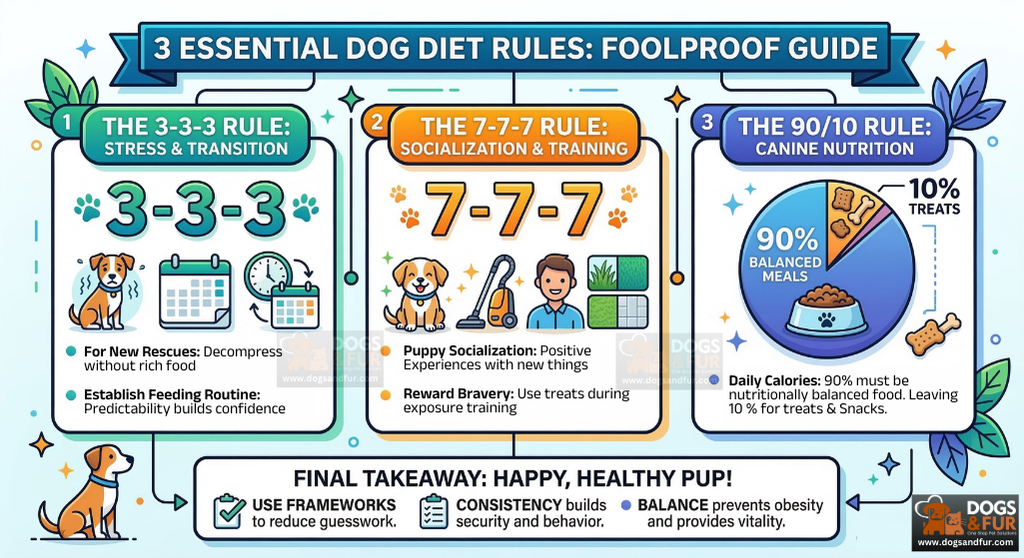
If you have recently opened your heart and home to a rescue pup, you have probably asked your veterinarian: What is the 3-3-3 rule for dogs? Traditionally, this famous framework is a behavioral and psychological timeline. It maps out the first 3 days of decompression, 3 weeks of learning the household routine, and 3 months of finally building deep trust.
But how does this translate into practical dog diet rules? Surprisingly, nutrition and anxiety are directly linked.
The Rescue Reality vs. Feeding Protocols
When a dog is highly stressed, their gut microbiome is the first system to take a massive hit. Think about it—do you crave a heavy, complex meal when your stomach is tied in nervous knots? Absolutely not. Neither do they.
3 Days: Decompression and Digestive Peace
During the first three days, the ultimate rule is to keep their menu incredibly boring. Stick to a bland diet or, ideally, exactly what the shelter was feeding them. Avoid introducing rich, novel proteins. Your goal isn’t to spoil them with gourmet food just yet; it’s to prevent stress-induced diarrhea.
3 Weeks: Establishing the Feeding Routine
By week three, your dog is frantically trying to figure out your schedule. This is when strict dog diet rules become your best friend. Feed them at the exact same times every single day. Predictability breeds confidence. When a dog knows exactly when breakfast and dinner are served, their overall anxiety plummets.
3 Months: Long-Term Nutritional Bonding
At the three-month mark, your pup finally feels at home. Now is the perfect time to safely and slowly transition them to a premium, long-term diet. You can start introducing high-quality nutritional add-ons, like the premium blends found right here at Dogs and Fur, to support their joints, coat, and digestion without risking an upset stomach.
What is the 7 7 7 rule for dogs?
Moving on to the chaotic world of puppies! If you are raising a young dog, you might be scratching your head wondering, What is the 7 7 7 rule for dogs? This is a classic socialization framework utilized by top breeders and trainers. It suggests that before a puppy turns 7 weeks old (or during their first weeks home with you), they should positively experience 7 different surfaces, 7 different objects, and 7 different people.
Socialization Meets Dog Diet Rules
So, how on earth does a socialization checklist fit into our dog diet rules? It’s simple: food is your ultimate currency.
When you are introducing a tiny puppy to a terrifying object—like a noisy vacuum cleaner or a slippery tile floor—what flips their emotional switch from stark terror to wagging joy? A high-value treat!
Using Treats to Conquer New Environments
Integrating dog diet rules into the 7-7-7 framework means strictly managing what and how much they eat while you train. You can’t just toss endless cubes of cheese at them all day and expect a healthy, well-rounded puppy. Instead, use a portion of their daily kibble allowance as training currency. It’s like paying them a salary for being brave! This ensures they get exposed to the world without suffering from an expanding waistline.
What is the 90 10 rule for dogs?
If there is only one non-negotiable dietary framework you memorize today, let it be this one. So, What is the 90 10 rule for dogs? It is the absolute gold standard of veterinary nutrition. It strictly mandates that 90% of your dog’s daily caloric intake must come from a complete, nutritionally balanced dog food, leaving a maximum of 10% of their calories for treats, snacks, and table scraps.
The Golden Ratio of Canine Nutrition
Why is this considered the king of all dog diet rules? Because commercial dog foods are meticulously formulated by veterinary nutritionists. They contain the exact, scientifically backed ratio of calcium, phosphorus, essential amino acids, and fats required to keep your dog’s organs functioning properly.
Why the 10% Treat Limit Matters
When you exceed that 10% treat limit, you dilute those essential, life-saving nutrients. It is the human equivalent of taking a great multivitamin in the morning, but then exclusively snacking on greasy potato chips for the rest of the day. Furthermore, overfeeding treats is the number one culprit behind the canine obesity epidemic. By strictly adhering to the 90/10 dog diet rules, you allow your dog to enjoy the fun of rewards while protecting their joints and heart. If you want to dive deeper into canine caloric needs, check out resources from the American Kennel Club.
Frequently Asked Questions (FAQs) About Dog Diet Rules
1. Are these dog diet rules scientifically backed?
Yes! While the 3-3-3 and 7-7-7 rules are widely accepted behavioral frameworks designed by animal behaviorists, the 90/10 rule is a strict nutritional guideline universally recommended by board-certified veterinary nutritionists to prevent obesity and malnutrition.
2. How do I calculate the 10% for my dog’s treats?
First, find out your dog’s total daily caloric requirement (your vet can provide this based on their ideal weight). If your dog needs 600 calories a day, only 60 calories should come from treats. You’ll be surprised how fast a single spoonful of peanut butter eats up that allowance!
3. Can I use human food within these dog diet rules?
Absolutely, as long as it fits into the 10% treat budget and is dog-safe. Fresh blueberries, carrot sticks, and green beans make phenomenal, low-calorie treats that seamlessly fit into your dog diet rules.
4. Does the 3-3-3 rule only apply to rescues?
While it was coined for shelter dogs, the 3-3-3 timeline beautifully applies to any major life transition. Whether you are bringing home a brand-new puppy or moving to a new house with your senior dog, their digestion and diet will need the same predictable, slow-paced grace period.
5. What if my dog gains weight despite following the 90/10 rule?
If you are strictly following the 90/10 rule and your dog is still packing on pounds, you may be overestimating their total daily caloric needs. Try reducing their primary 90% kibble portion slightly, increase their daily exercise, and consult your veterinarian to rule out thyroid issues.
Conclusion: Making These Rules Work for Your Pup
Mastering canine nutrition doesn’t have to require a Ph.D. By embracing the structure of the 3-3-3 behavioral timeline, utilizing food properly during the 7-7-7 socialization phase, and strictly enforcing the 90/10 caloric split, you are setting your best friend up for incredible success. These dog diet rules are more than just arbitrary guidelines; they are acts of love. They provide the boundaries, predictability, and balanced nutrition your dog desperately needs to thrive. So, the next time those puppy-dog eyes beg for an extra treat, remember the frameworks! Stick to your dog diet rules, and you’ll be rewarded with years of healthy, vibrant tail wags.